
244, 1st Main Rd, near Rajkumar, Kasturi Layout, Kaveri Nagar, Basaweshwara Nagar, Bengaluru, Karnataka 560079
08:00 am - 10:00 pm Monday-Saturday
244, 1st Main Rd, near Rajkumar, Kasturi Layout, Kaveri Nagar, Basaweshwara Nagar, Bengaluru, Karnataka 560079
08:00 am - 10:00 pm Monday-Saturday
AEC

Aec

₹ 200 ₹ 300 30% OFF
Booking Assistance Online
Need help? Chat with us on WhatsApp
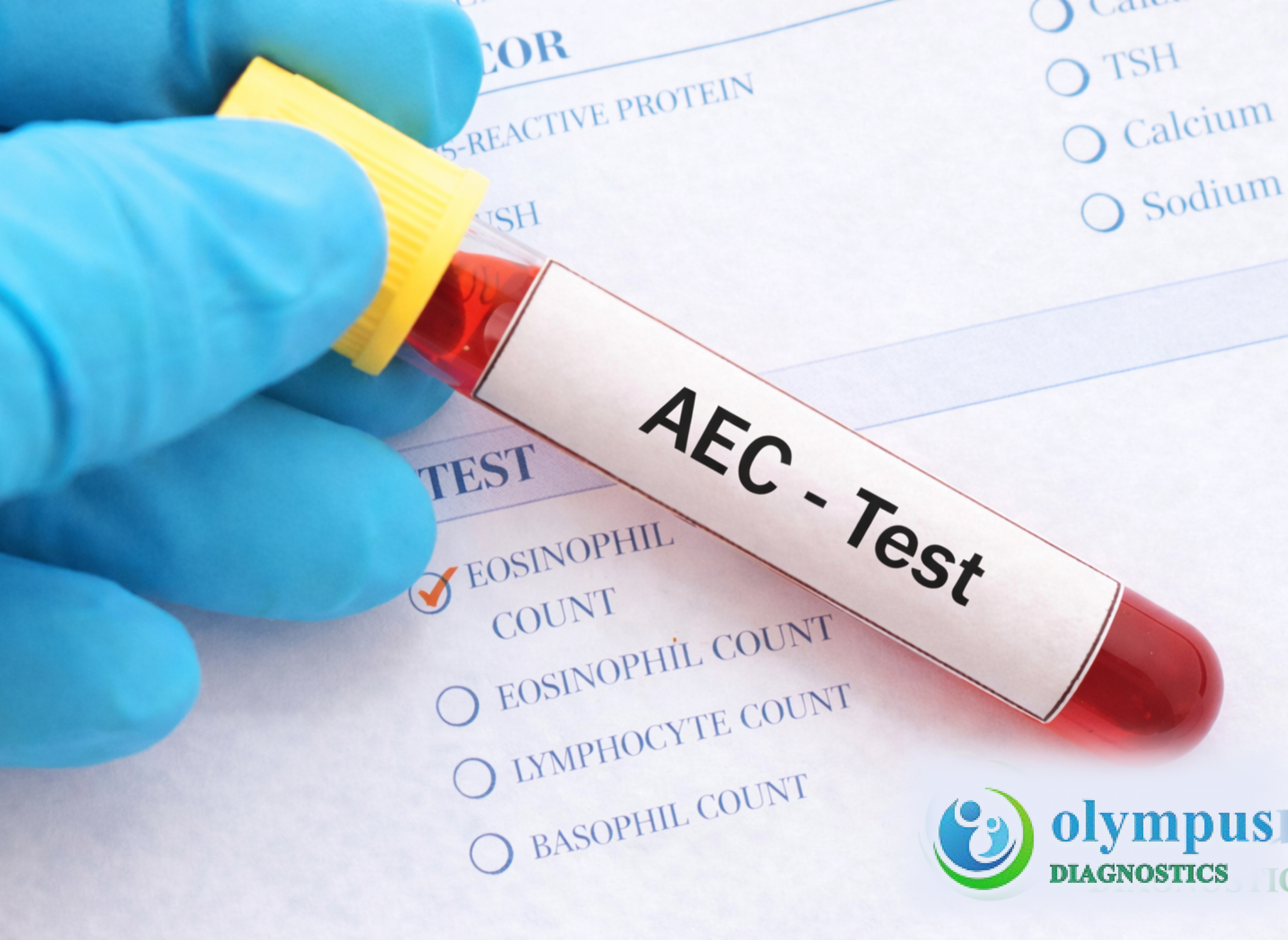
The Absolute Eosinophil Count (AEC) test measures the number of eosinophils (a type of white blood cell) in the blood. It helps diagnose allergic reactions, parasitic infections, and certain blood disorders.

Sample Type

Blood

Includes

16 Parameters

Report

Within 24 hours

✅ Performed by certified phlebotomists

Absolute Eosinophil Count (AEC) Test Overview

Eosinophils are white blood cells that play a role in the body’s immune response, especially against allergies and parasitic infections.

The AEC test provides the exact number of eosinophils per microliter of blood, rather than just a percentage.

It is often ordered when patients show symptoms like persistent cough, wheezing, skin rashes, or unexplained fever.

Clinical uses include:

Detecting allergic conditions (asthma, hay fever, eczema).

Identifying parasitic infections (roundworm, hookworm, filariasis).

Monitoring blood disorders such as hypereosinophilic syndrome or certain leukemias.

Both low counts and high counts (eosinophilia) can provide important diagnostic clues.

Analyte: Eosinophils (a type of white blood cell).

Normal Range: Typically 30–350 eosinophils/µL of blood in adults (ranges may vary by lab).

High AEC (Eosinophilia): May suggest allergies, asthma, parasitic infections, autoimmune disease, or certain cancers.

Low AEC: Usually not clinically significant but may occur in stress or steroid therapy.

Clinical Use:

Helps diagnose allergic and parasitic conditions.

Monitors treatment response in eosinophilia-related disorders.

Supports evaluation of unexplained fevers or respiratory issues.

✓