
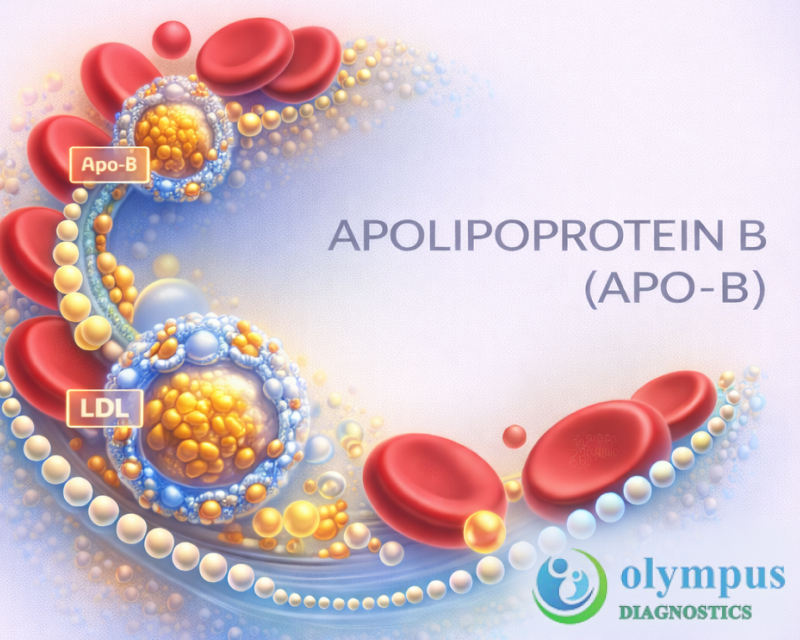
Apo-B is the main protein component of low-density lipoprotein (LDL), often called “bad cholesterol.”
Each LDL particle contains one Apo-B molecule, making Apo-B a direct measure of LDL particle number.
Clinical uses include:
Assessing cardiovascular risk more accurately than LDL cholesterol alone.
Monitoring patients with dyslipidemia, metabolic syndrome, or coronary artery disease.
Evaluating effectiveness of lipid-lowering therapy.
Supporting diagnosis of familial hypercholesterolemia and other genetic lipid disorders.
The test is performed using a blood sample.