
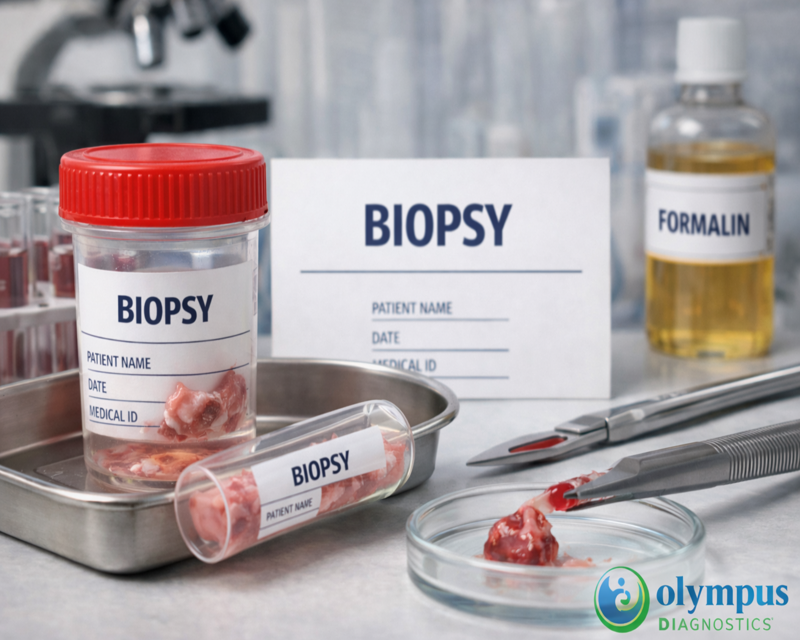
A biopsy provides direct evidence of disease by examining tissue architecture and cellular details.
It can be performed using different techniques depending on the site and clinical suspicion:
Needle biopsy (fine-needle aspiration, core biopsy).
Incisional biopsy (removing part of a lesion).
Excisional biopsy (removing the entire lesion).
Endoscopic or surgical biopsy (internal organs).
Clinical uses include:
Diagnosing malignant tumors and differentiating benign from malignant lesions.
Evaluating chronic inflammatory or autoimmune conditions.
Detecting infectious diseases (e.g., TB, fungal infections).
Assessing organ-specific pathology (liver, kidney, lung, GI tract, skin, etc.).
The specimen is processed by histopathology, often with special stains, immunohistochemistry, or molecular testing.