
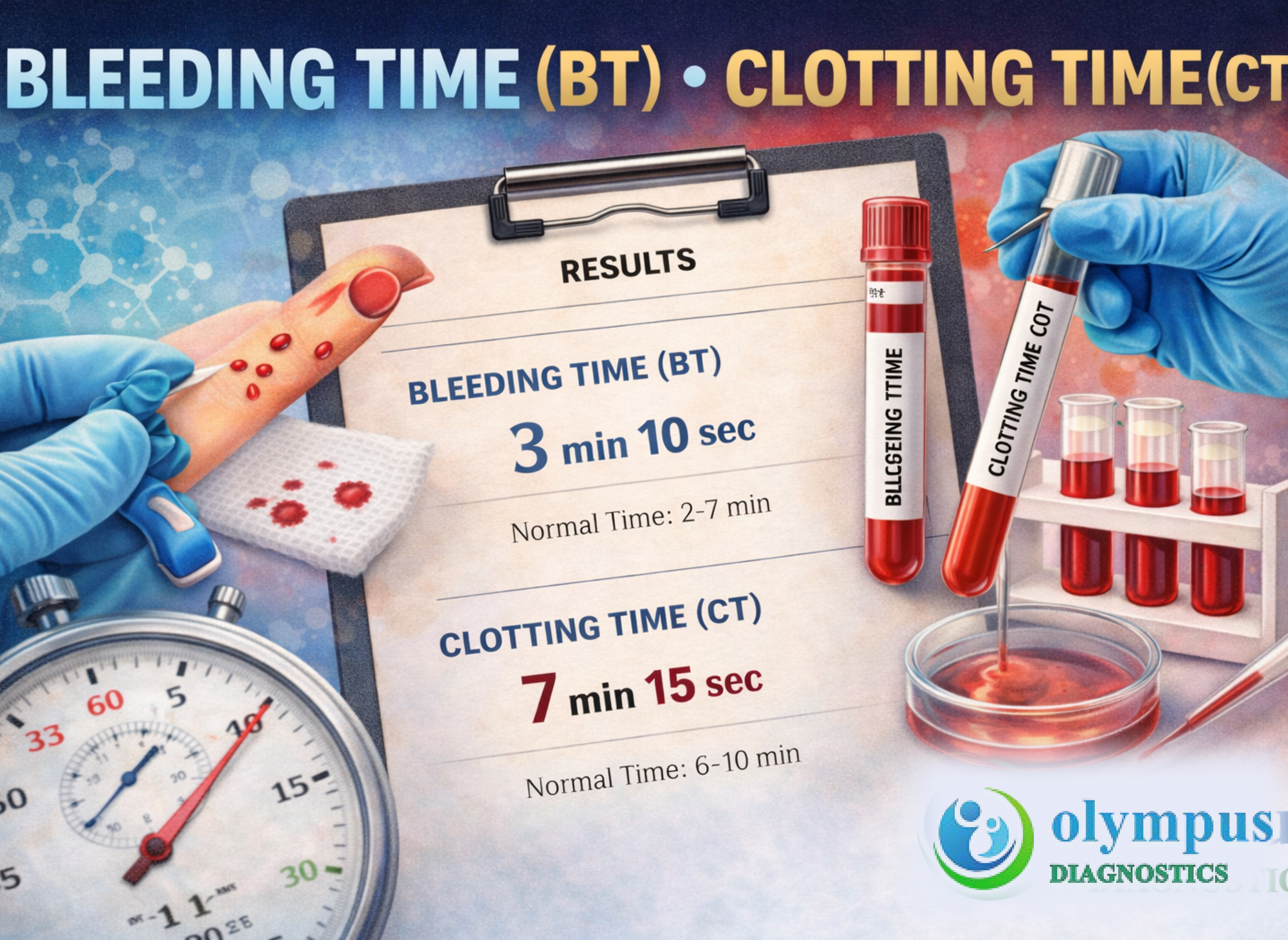
Bleeding Time (BT):
Assesses primary hemostasis – the ability of platelets and small blood vessels to stop bleeding.
Performed by making a small puncture and recording the time until bleeding stops.
Used to detect platelet function disorders and conditions like thrombocytopenia or von Willebrand disease.
Clotting Time (CT):
Measures the time taken for blood to clot in a test tube.
Evaluates the intrinsic pathway of the coagulation cascade.
Helps detect clotting factor deficiencies, hemophilia, or other coagulation disorders.
Together, BT and CT provide a basic assessment of hemostasis and are often used as preliminary screening tests before surgery or when investigating unexplained bleeding/bruising.