
244, 1st Main Rd, near Rajkumar, Kasturi Layout, Kaveri Nagar, Basaweshwara Nagar, Bengaluru, Karnataka 560079
08:00 am - 10:00 pm Monday-Saturday
244, 1st Main Rd, near Rajkumar, Kasturi Layout, Kaveri Nagar, Basaweshwara Nagar, Bengaluru, Karnataka 560079
08:00 am - 10:00 pm Monday-Saturday
DIFFERENTIAL COUNT (DC)

Differential Count (Dc)

₹ 100 ₹ 200 30% OFF
Booking Assistance Online
Need help? Chat with us on WhatsApp
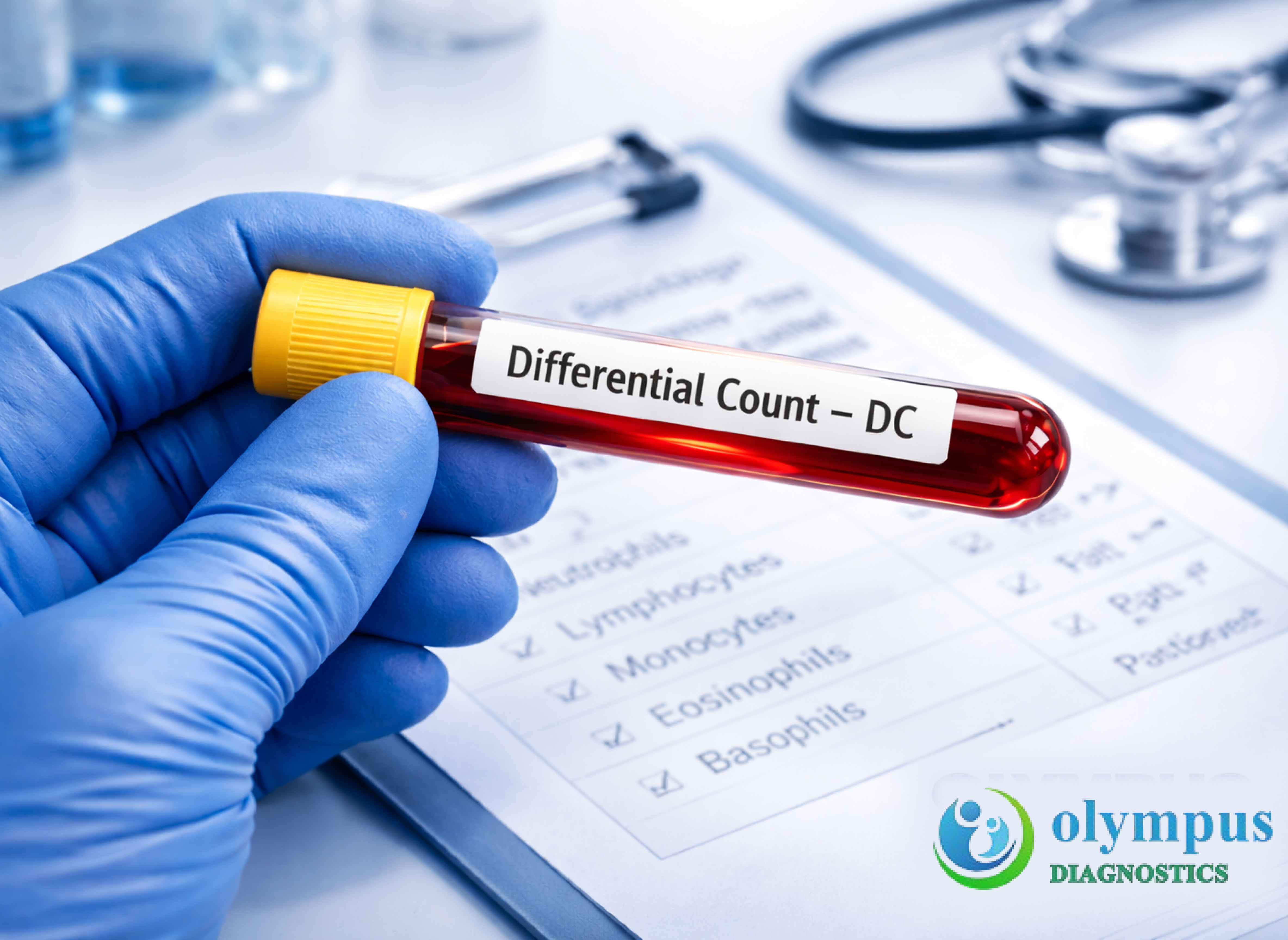
The Differential Count (DC) test measures the percentage of different types of white blood cells (WBCs) in the blood. It helps diagnose infections, immune disorders, and blood-related conditions.

Sample Type

Blood

Includes

16 Parameters

Report

Within 24 hours

Performed by certified phlebotomists

Differential Count (DC) Test Overview

The Differential Count is part of a Complete Blood Count (CBC).

It provides detailed information about the distribution of white blood cells, which play a vital role in immunity.

Doctors use DC to:

Identify infections (bacterial, viral, parasitic).

Detect allergic reactions and inflammatory conditions.

Monitor bone marrow and immune system function.

Support diagnosis of blood cancers like leukemia.

The test is performed using a blood sample and analyzed under a microscope or automated analyzer.

Analytes/Parameters Measured (WBC types):

Neutrophils: Fight bacterial infections.

Lymphocytes: Defend against viral infections and regulate immune response.

Monocytes: Help remove dead cells and fight chronic infections.

Eosinophils: Involved in allergic reactions and defense against parasites.

Basophils: Play a role in allergic responses and inflammation.

Normal Range (approximate % of total WBCs):

Neutrophils: 40–70%

Lymphocytes: 20–40%

Monocytes: 2–10%

Eosinophils: 1–6%

Basophils: <1%

Clinical Use:

Differentiates between bacterial vs viral infections.

Detects allergic and parasitic conditions.

Assists in diagnosing hematologic disorders.

Monitors immune system health.