
244, 1st Main Rd, near Rajkumar, Kasturi Layout, Kaveri Nagar, Basaweshwara Nagar, Bengaluru, Karnataka 560079
08:00 am - 10:00 pm Monday-Saturday
244, 1st Main Rd, near Rajkumar, Kasturi Layout, Kaveri Nagar, Basaweshwara Nagar, Bengaluru, Karnataka 560079
08:00 am - 10:00 pm Monday-Saturday
DIRECT COOMB'S TEST (DCT)

Direct Coomb's Test (Dct)

₹ 600 ₹ 900 30% OFF
Booking Assistance Online
Need help? Chat with us on WhatsApp
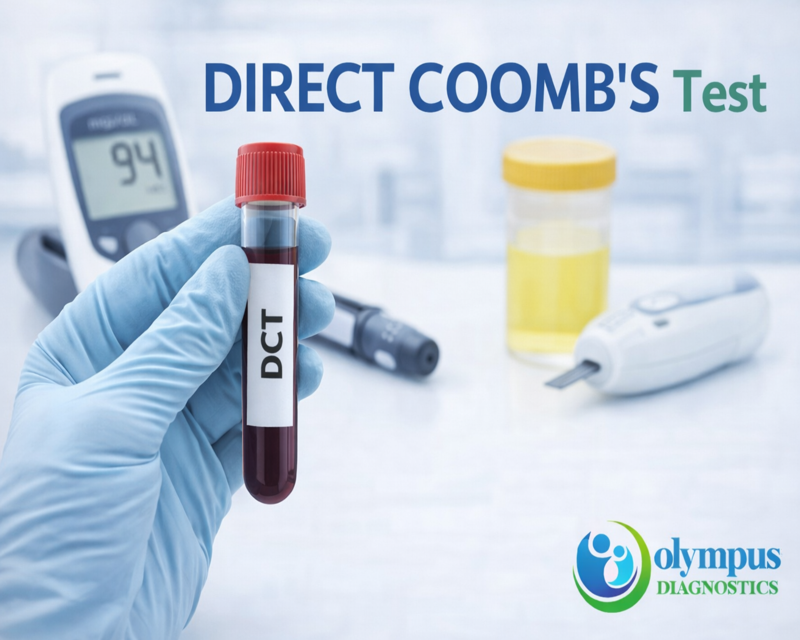
The Direct Coomb’s Test (DCT), also known as the Direct Antiglobulin Test (DAT), detects antibodies or complement proteins attached to red blood cells. It is primarily used to diagnose autoimmune hemolytic anemia and investigate transfusion reactions.

Sample Type

Blood

Includes

16 Parameters

Report

Within 24 hours

Performed by certified phlebotomists

Direct Coomb’s Test (DCT) Overview

The test identifies IgG antibodies or complement (C3) bound directly to the surface of red blood cells.

A positive result indicates immune-mediated hemolysis.

Clinical uses include:

Diagnosing autoimmune hemolytic anemia (AIHA).

Investigating hemolytic transfusion reactions.

Detecting hemolytic disease of the newborn (HDN) due to maternal antibodies.

Monitoring patients with drug-induced hemolysis.

The test is performed by mixing patient RBCs with Coomb’s reagent (anti-human globulin); agglutination indicates a positive result.

Analyte: Antibodies (IgG) or complement proteins bound to red blood cells.

Normal Result: Negative (no agglutination).

Abnormal Findings:

Positive DCT: Indicates immune-mediated hemolysis (AIHA, transfusion reaction, HDN, drug-induced hemolysis).

Clinical Use:

Provides a direct measure of antibody/complement coating on RBCs.

Helps differentiate causes of anemia and hemolysis.

Guides treatment decisions in transfusion medicine and hematology.