
244, 1st Main Rd, near Rajkumar, Kasturi Layout, Kaveri Nagar, Basaweshwara Nagar, Bengaluru, Karnataka 560079
08:00 am - 10:00 pm Monday-Saturday
244, 1st Main Rd, near Rajkumar, Kasturi Layout, Kaveri Nagar, Basaweshwara Nagar, Bengaluru, Karnataka 560079
08:00 am - 10:00 pm Monday-Saturday
ESR

Esr

₹ 100 ₹ 200 30% OFF
Booking Assistance Online
Need help? Chat with us on WhatsApp
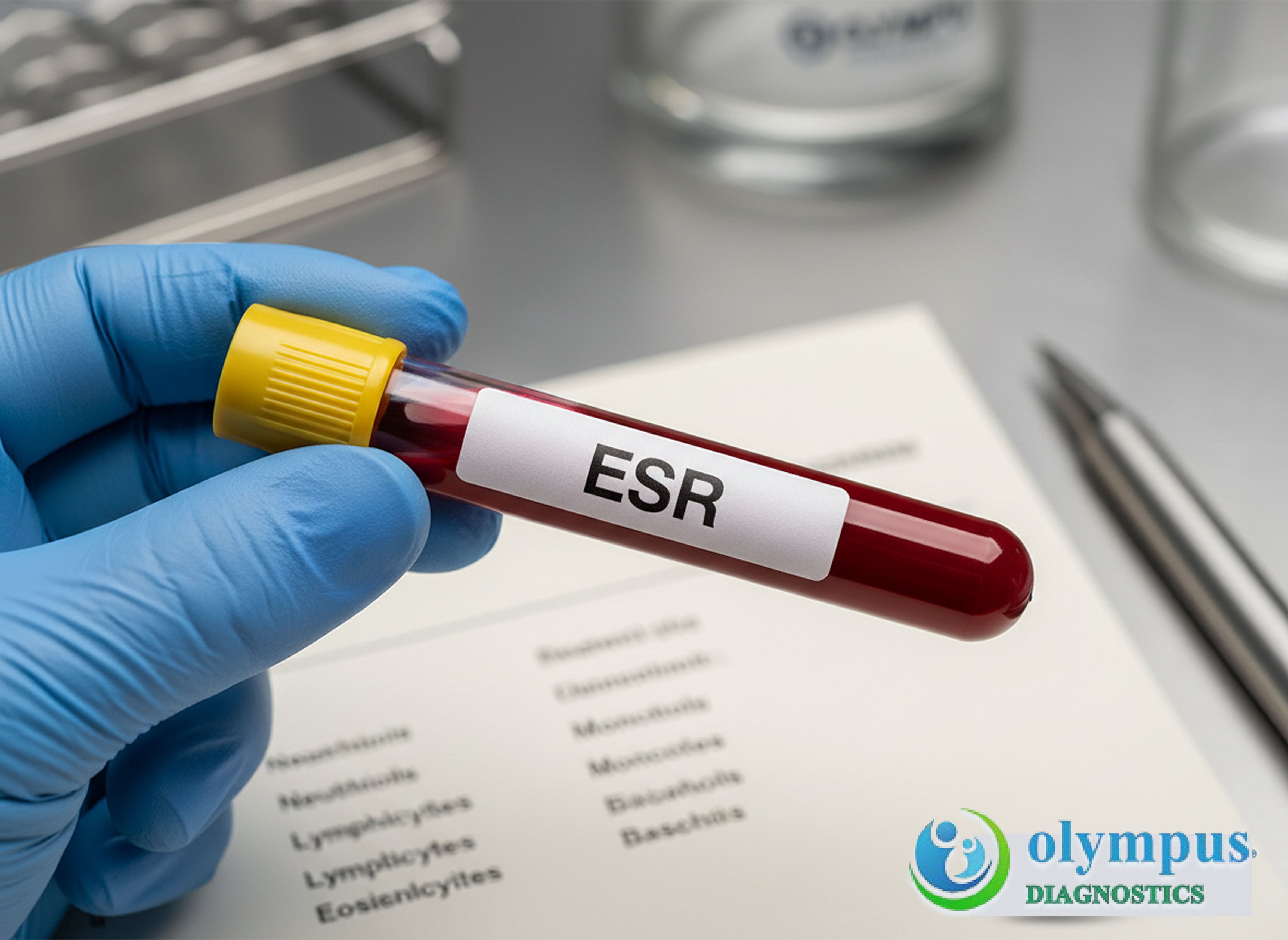
The Erythrocyte Sedimentation Rate (ESR) test measures how quickly red blood cells settle at the bottom of a test tube. It is a non-specific marker of inflammation in the body.

Sample Type

Blood

Includes

16 Parameters

Report

Within 24 hours

Performed by certified phlebotomists

Erythrocyte Sedimentation Rate (ESR) Test Overview

ESR is a simple blood test that helps detect inflammation.

It does not diagnose a specific disease but indicates the presence of an inflammatory process.

Doctors often order ESR along with other tests to evaluate conditions such as:

Infections

Autoimmune diseases (e.g., rheumatoid arthritis, lupus)

Chronic inflammatory conditions

Certain cancers

ESR is also used to monitor disease activity and treatment response.

The test is performed using a blood sample placed in a vertical tube, measuring the rate at which red cells settle over one hour.

Analyte: Sedimentation rate of red blood cells.

Normal Range:

Men: 0–15 mm/hr

Women: 0–20 mm/hr

Children: 0–10 mm/hr

Elderly: May be slightly higher (ranges vary by lab).

High ESR: Suggests inflammation, infection, autoimmune disease, or cancer.

Low ESR: Rare, but may occur in conditions like polycythemia or sickle cell disease.

Clinical Use:

Detects and monitors inflammation.

Assists in diagnosing autoimmune and chronic diseases.

Provides supportive information alongside other tests (CRP, CBC).