
244, 1st Main Rd, near Rajkumar, Kasturi Layout, Kaveri Nagar, Basaweshwara Nagar, Bengaluru, Karnataka 560079
08:00 am - 10:00 pm Monday-Saturday
244, 1st Main Rd, near Rajkumar, Kasturi Layout, Kaveri Nagar, Basaweshwara Nagar, Bengaluru, Karnataka 560079
08:00 am - 10:00 pm Monday-Saturday
IMMUNOGLOBULIN IgE

Immunoglobulin Ige

₹ 1000 ₹ 900 30% OFF
Booking Assistance Online
Need help? Chat with us on WhatsApp
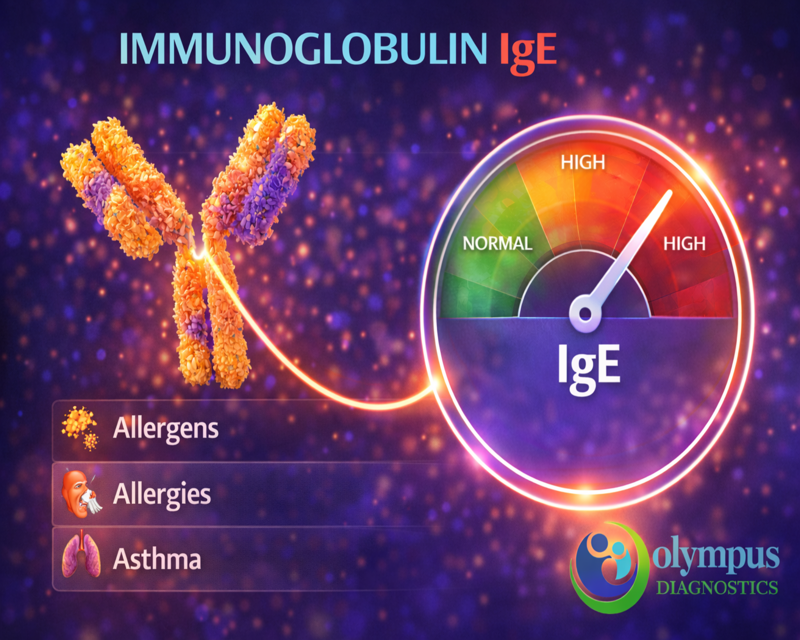
The Immunoglobulin E (IgE) test measures the level of IgE antibodies in blood. It is primarily used to evaluate allergic conditions, asthma, parasitic infections, and certain immune disorders

Sample Type

Blood

Includes

16 Parameters

Report

Within 24 hours

✅ Performed by certified phlebotomists

Immunoglobulin IgE Test Overview

IgE is an antibody produced by the immune system in response to allergens.

Elevated IgE levels are strongly associated with allergic diseases such as hay fever, eczema, asthma, and food allergies.

Clinical uses include:

Diagnosing and monitoring allergic conditions.

Supporting evaluation of asthma severity.

Detecting parasitic infections (which can also raise IgE levels).

Assessing immune system disorders (e.g., Hyper‑IgE syndrome).

Often performed alongside specific allergen IgE tests to identify triggers.

Analyte: Serum IgE concentration (IU/mL).

Normal Range (varies by age and lab):

Children: < 60 IU/mL

Adults: < 100–150 IU/mL

Abnormal Findings:

High IgE: Suggests allergic conditions, asthma, eczema, parasitic infections, or immunodeficiency syndromes.

Low/Normal IgE: Usually indicates absence of significant allergic or parasitic activity.

Clinical Use:

Provides a general marker of allergic sensitivity.

Helps guide allergy management and treatment.

Supports diagnosis of immune and parasitic disorders.

✓