
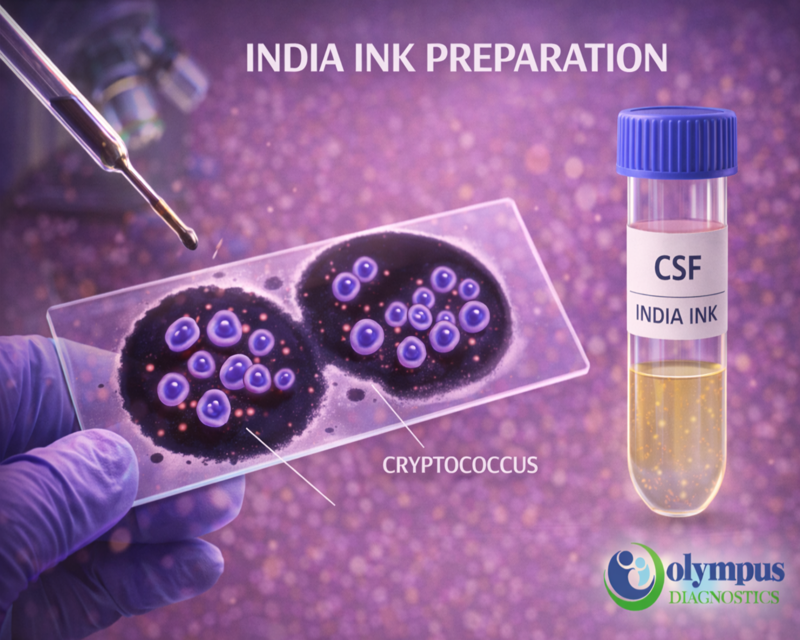
Principle: India ink provides a dark background, while the polysaccharide capsule of Cryptococcus excludes the ink, appearing as a clear halo around the yeast cell.
Sample Type: Cerebrospinal fluid (CSF) is most commonly used; other fluids may also be tested.
Clinical Uses:
Rapid diagnosis of cryptococcal meningitis, especially in immunocompromised patients (e.g., HIV/AIDS).
Screening tool in resource‑limited settings where advanced tests (like antigen detection or PCR) may not be available.
Advantages: Quick, inexpensive, and requires minimal equipment.
Limitations:
Sensitivity is relatively low (~50–80%).
Negative results do not rule out infection; confirmatory tests (Cryptococcal Antigen, Culture, PCR) are recommended.