
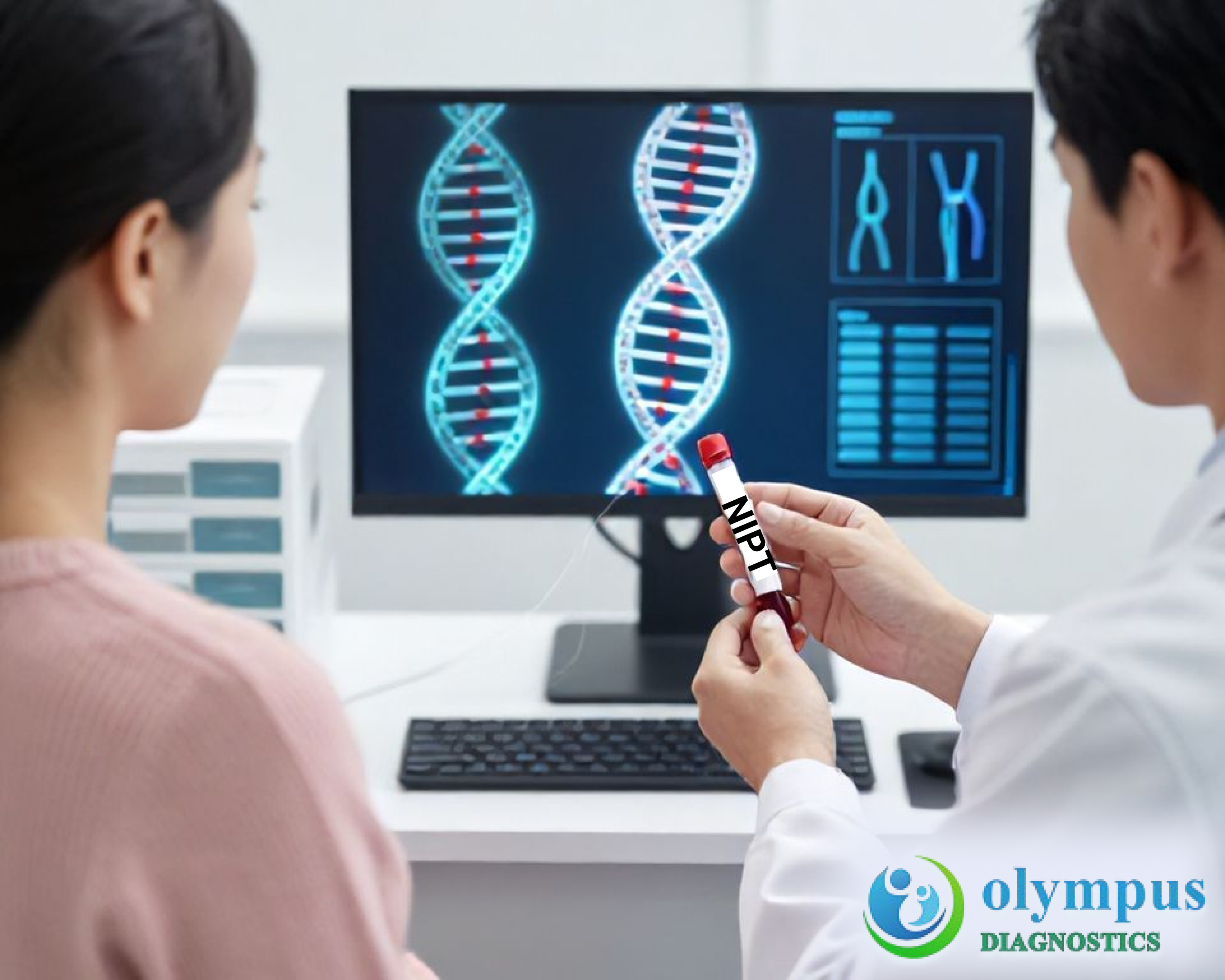
NIPT is a highly sensitive screening test performed during pregnancy.
It uses cell-free fetal DNA (cfDNA) found in maternal blood to detect chromosomal abnormalities.
Clinical uses include:
Screening for trisomy 21 (Down syndrome).
Screening for trisomy 18 (Edwards syndrome).
Screening for trisomy 13 (Patau syndrome).
Detecting abnormalities in sex chromosomes (e.g., Turner syndrome, Klinefelter syndrome).
The test is safe, non-invasive, and can be performed as early as 10 weeks of gestation.
It is a screening test, not a diagnostic test — abnormal results are usually confirmed with amniocentesis or chorionic villus sampling (CVS).