
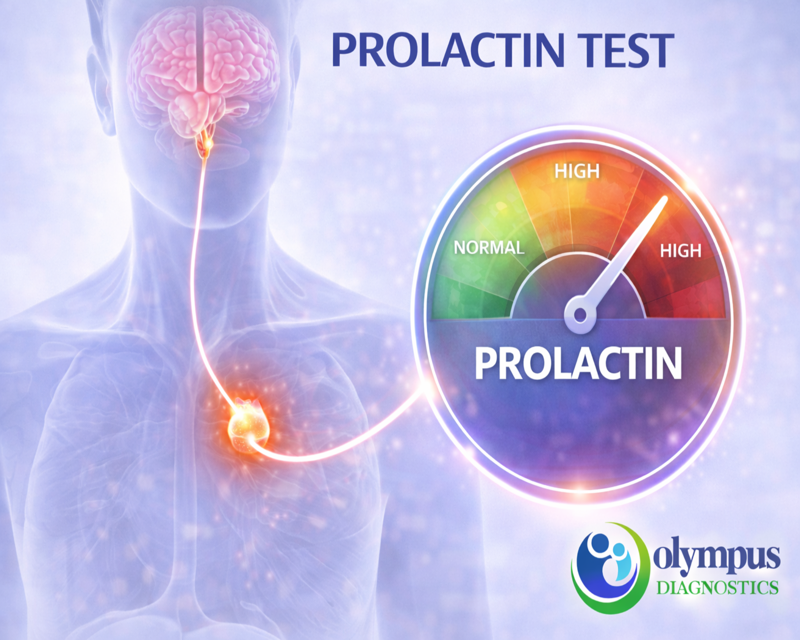
Prolactin stimulates breast development and milk production after childbirth.
In women, abnormal levels can cause menstrual irregularities, infertility, or inappropriate breast milk production.
In men, high prolactin can lead to reduced libido, erectile dysfunction, and infertility.
Clinical uses include:
Diagnosing hyperprolactinemia (often due to pituitary adenomas).
Evaluating amenorrhea, galactorrhea, and infertility.
Monitoring pituitary gland function.
Supporting diagnosis of hormonal imbalances.
Often performed alongside LH, FSH, estradiol, testosterone, and thyroid function tests for a complete endocrine profile.