
244, 1st Main Rd, near Rajkumar, Kasturi Layout, Kaveri Nagar, Basaweshwara Nagar, Bengaluru, Karnataka 560079
08:00 am - 10:00 pm Monday-Saturday
244, 1st Main Rd, near Rajkumar, Kasturi Layout, Kaveri Nagar, Basaweshwara Nagar, Bengaluru, Karnataka 560079
08:00 am - 10:00 pm Monday-Saturday
PT INR

Pt Inr

₹ 450 ₹ 600 30% OFF
Booking Assistance Online
Need help? Chat with us on WhatsApp
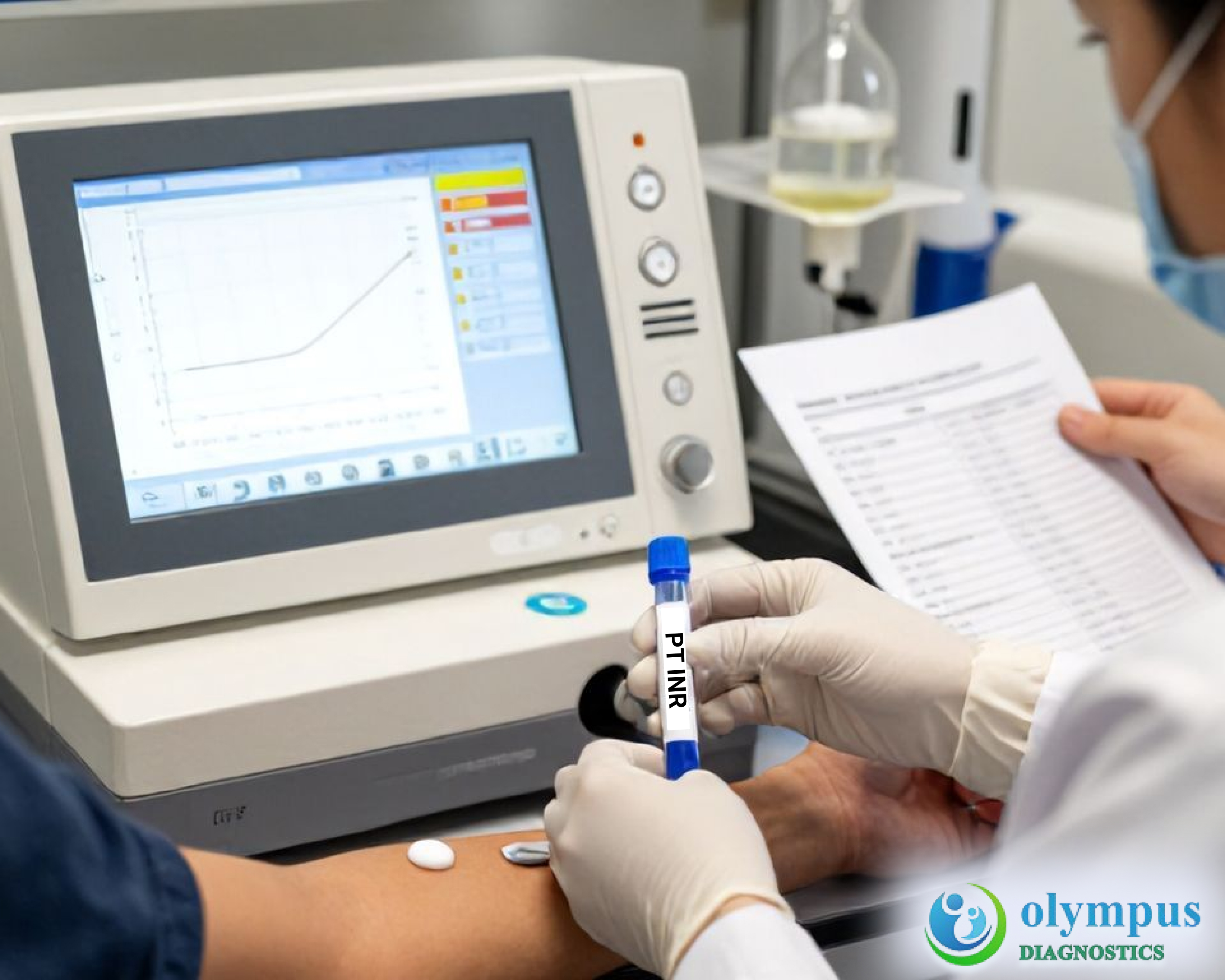
The PT/INR test measures how long it takes blood to clot and standardizes results across laboratories. It is primarily used to monitor anticoagulant therapy (warfarin) and evaluate clotting disorders.

Sample Type

Blood

Includes

16 Parameters

Report

Within 24 hours

Performed by certified phlebotomists

Prothrombin Time (PT) & INR Test Overview

Prothrombin Time (PT): Measures the time (in seconds) for plasma to clot after adding tissue factor.

International Normalized Ratio (INR): Standardizes PT results across labs, allowing consistent monitoring of anticoagulant therapy.

Clinical uses include:

Monitoring patients on warfarin therapy.

Detecting bleeding disorders due to clotting factor deficiencies.

Assessing liver disease and vitamin K deficiency.

Supporting diagnosis of disseminated intravascular coagulation (DIC).

Analyte: Clotting time (PT) and standardized ratio (INR).

Normal Range:

PT: ~11–15 seconds (varies slightly by lab).

INR: 0.8–1.2 (normal, not on anticoagulants).

Therapeutic INR Range:

2.0–3.0: For most indications (e.g., atrial fibrillation, DVT, PE).

2.5–3.5: For mechanical heart valves.

Prolonged PT/High INR: May indicate liver disease, vitamin K deficiency, clotting factor deficiency, or anticoagulant therapy.

Clinical Use:

Evaluates clotting ability.

Monitors anticoagulant therapy.

Detects bleeding/clotting disorders.