
244, 1st Main Rd, near Rajkumar, Kasturi Layout, Kaveri Nagar, Basaweshwara Nagar, Bengaluru, Karnataka 560079
08:00 am - 10:00 pm Monday-Saturday
244, 1st Main Rd, near Rajkumar, Kasturi Layout, Kaveri Nagar, Basaweshwara Nagar, Bengaluru, Karnataka 560079
08:00 am - 10:00 pm Monday-Saturday
TROPONIN l (HIGH SENSITIVE)

Troponin L (High Sensitive)

₹ 1600 ₹ 900 30% OFF
Booking Assistance Online
Need help? Chat with us on WhatsApp
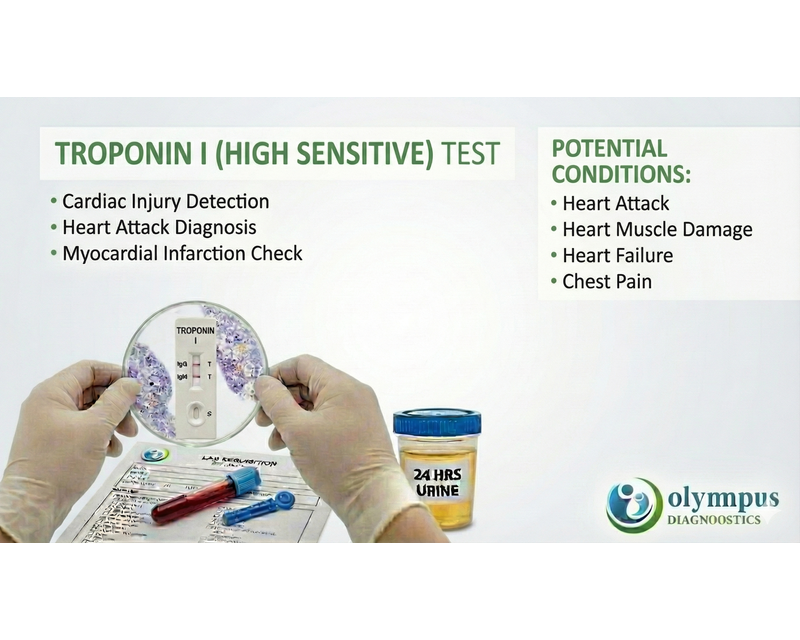
The High‑sensitivity Troponin I (hs‑TnI) test measures very low levels of cardiac troponin I protein in blood, allowing early detection of heart muscle injury. It is primarily used to diagnose acute myocardial infarction (heart attack) and monitor cardiac risk with greater sensitivity than standard

Sample Type

Blood

Includes

16 Parameters

Report

Within 24 hours

Performed by certified phlebotomists

High‑sensitivity Troponin I Test Overview

Troponin I is a cardiac protein released into the blood when heart muscle cells are damaged.

The high‑sensitivity assay can detect troponin at much lower concentrations than conventional tests.

Clinical uses include:

Early diagnosis of acute myocardial infarction (AMI), even within hours of symptom onset.

Detecting minor myocardial injury not picked up by standard troponin tests.

Risk stratification in patients with chest pain or suspected ischemia.

Monitoring cardiac injury in critically ill patients (e.g., sepsis, heart failure).

Considered the preferred biomarker in emergency and cardiology practice for rapid rule‑in/rule‑out of AMI.

Analyte: High‑sensitivity Cardiac Troponin I in serum/plasma (ng/L).

Normal Range (varies by lab): Typically <14 ng/L (cut‑off depends on assay).

Abnormal Findings:

Elevated hs‑TnI: Suggests myocardial injury (heart attack, myocarditis, cardiac trauma, severe hypertension).

Serial measurements: Rising/falling pattern confirms acute myocardial infarction.

Clinical Use:

Provides a highly sensitive and specific marker of cardiac injury.

Enables earlier detection and intervention compared to conventional troponin tests.

Supports cardiology, emergency medicine, and critical care evaluations.